Buy bedihost.eu ?
We are moving the project
bedihost.eu .
Are you interested in purchasing the domain
bedihost.eu ?
domain@kv-gmbh.de · 0541-91531010
Buy bedihost.eu ?
What is a unit circle?
A unit circle is a circle with a radius of 1, centered at the origin of a coordinate plane. It is used in mathematics, particularly in trigonometry, to define the values of trigonometric functions such as sine and cosine. The unit circle is a useful tool for understanding the relationships between angles and the coordinates of points on the circle, and it is often used to solve trigonometric equations and problems. The unit circle is also used to define the values of trigonometric functions for any angle, not just those between 0 and 90 degrees. **
Can you explain the unit circle?
The unit circle is a circle with a radius of 1, centered at the origin of a coordinate plane. It is used in trigonometry to understand the relationships between the angles and the coordinates of points on the circle. The x-coordinate of a point on the unit circle represents the cosine of the angle, and the y-coordinate represents the sine of the angle. This allows us to easily find the sine and cosine values of any angle by looking at the coordinates of the corresponding point on the unit circle. The unit circle is a fundamental tool in trigonometry and is used to solve a wide range of problems involving angles and trigonometric functions. **


Similar search terms for Unit circle
Top-Angebote
Products related to Unit circle:
-
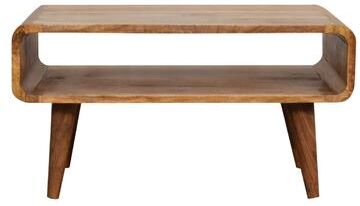
Artisan Furniture Open Oak-ish Media UnitThis media unit features a very simplistic and clean design. It has 4 tapered legs, and a oak-ish body constructed from 100% solid mango wood. Being a simple piece it features one open compartment for placing any books or magazines.278,99 $*Shipping: 0,00 $Secure redirect to the provider

-
How does the unit circle work?
The unit circle is a circle with a radius of 1, centered at the origin of a coordinate plane. It is used in trigonometry to understand the relationships between the angles and the coordinates of points on the circle. The x-coordinate of a point on the unit circle represents the cosine of the angle, and the y-coordinate represents the sine of the angle. This allows us to easily find the sine and cosine values for any angle, and also understand the relationships between the trigonometric functions. The unit circle is a fundamental tool for understanding trigonometry and is used extensively in calculus and physics. **
-
How do you calculate the unit circle?
The unit circle is a circle with a radius of 1 centered at the origin on a coordinate plane. To calculate points on the unit circle, you can use the trigonometric functions sine and cosine. For any angle θ in standard position, the x-coordinate of the point where the terminal side of the angle intersects the unit circle is cos(θ) and the y-coordinate is sin(θ). By using these trigonometric functions, you can determine the coordinates of any point on the unit circle for a given angle. **
-
What is the unit circle in mathematics?
The unit circle in mathematics is a circle with a radius of 1, centered at the origin of a coordinate plane. It is used to define trigonometric functions and their properties. The unit circle is a fundamental concept in trigonometry, as it allows for easy visualization and understanding of the relationships between angles, coordinates, and trigonometric values such as sine and cosine. It is a key tool for solving problems involving angles and circular motion in mathematics and physics. **
-
What are tasks related to the unit circle?
Tasks related to the unit circle include finding the coordinates of points on the unit circle, determining the sine, cosine, and tangent values of specific angles, converting between radians and degrees, and solving trigonometric equations using the unit circle. Additionally, understanding the relationship between the unit circle and the trigonometric functions is essential for solving problems involving angles and triangles. Practicing these tasks can help improve one's understanding of trigonometry and its applications in various fields. **

Can you please justify using the unit circle?
The unit circle is a valuable tool in trigonometry because it provides a simple way to visualize and understand the relationships between angles, trigonometric functions, and the coordinates of points on the circle. It allows for easy conversion between the different trigonometric functions and provides a geometric interpretation of these functions. Additionally, the unit circle is used to define the trigonometric functions for all angles, not just acute angles, making it a versatile and comprehensive tool for trigonometric calculations and problem-solving. Overall, the unit circle is a fundamental concept in trigonometry that provides a clear and intuitive framework for understanding trigonometric functions and their applications. **
What is the tangent in the unit circle?
In the unit circle, the tangent of an angle is the ratio of the length of the side opposite the angle to the length of the side adjacent to the angle. This can also be expressed as the y-coordinate divided by the x-coordinate of the point on the unit circle corresponding to the angle. The tangent function is defined for all real numbers except for the values where the cosine is zero, which correspond to the vertical asymptotes of the tangent function. **
Top-Angebote
Products related to Unit circle:
-
Lenox Silver Velvet Pillow Back Modular Sofa Range, Modular Armless Unit / Modular Armless UnitOrder your fabric sample. Say hello to your dream living room with the Lenox Sofa range. Indulge yourself in luxurious comfort, this gorgeous large sofa range will add WOW factor to any living room, with a generously deep seat cushion design that is perfect for cosying up in front of the TV. This sofa collection is available as a corner sofa and footstool and is also available as modular pieces that can be configured in any number of ways to suit any size space. Just choose a pre-selected set or pick and mix pieces to create your unique sofa shape. Perfect for ever-changing needs and spaces, this sofa range is built to last. Irresistibly plump, this generously sized sofa has deep generous seats with foam and fibre-filled fixed seat cushions, and a stylish feather-filled scatter back design that is perfect for sinking into. Stylish and cosy, this sofa is upholstered with sumptuous pale grey velvet fabric that will work in any pale neutrals scheme. Dimensions: Chaise Modular Unit (Left & Right Hand Facing): 215 cm x 125 cm Corner Modular Unit (Left & Right Hand Facing): 125 cm x 125 cm Armless Section: 125 cm x 90 cm Footstool: 90 cm x 90 cm Scatter Cushions: For the modular pieces, these are the number of scatters per unit: Chaise modular unit: 2 x 60x60cm, 2 x 50x50cm and 1 x 47.5x27cm Armless modular unit: 1 x 60x60cm, 1 x 50x50cm and 2 x 47.5x27cm Corner modular unit: 2 x 60x60cm, 1 x 50x50cm and 1 x 47.5x27cm Seat height: 40 cm Expertly made to order in the UK.899,00 £*Shipping: 4,99 £Secure redirect to the provider
-
Lenox Shadow Grey Velvet Pillow Back Modular Sofa Range, Modular Armless Unit / Modular Armless UnitOrder your fabric sample. Say hello to your dream living room with the Lenox Sofa range. Indulge yourself in luxurious comfort, this gorgeous large sofa range will add WOW factor to any living room, with a generously deep seat cushion design that is perfect for cosying up in front of the TV. This sofa collection is available as a corner sofa and footstool and is also available as modular pieces that can be configured in any number of ways to suit any size space. Just choose a pre-selected set or pick and mix pieces to create your unique sofa shape. Perfect for ever-changing needs and spaces, this sofa range is built to last. Irresistibly plump, this generously sized sofa has deep generous seats with foam and fibre-filled fixed seat cushions, and a stylish feather-filled scatter back design that is perfect for sinking into. Stylish and cosy, this sofa is upholstered with sumptuous Shadow Grey velvet fabric that will work in most modern schemes. Dimensions: Chaise Modular Unit (Left & Right Hand Facing): 215 cm x 125 cm Corner Modular Unit (Left & Right Hand Facing): 125 cm x 125 cm Armless Section: 125 cm x 90 cm Footstool: 90 cm x 90 cm Scatter Cushions: For the modular pieces, these are the number of scatters per unit: Chaise modular unit: 2 x 60x60cm, 2 x 50x50cm and 1 x 47.5x27cm Armless modular unit: 1 x 60x60cm, 1 x 50x50cm and 2 x 47.5x27cm Corner modular unit: 2 x 60x60cm, 1 x 50x50cm and 1 x 47.5x27cm Seat height: 40 cm Expertly made to order in the UK.899,00 £*Shipping: 4,99 £Secure redirect to the provider
-
What is a unit circle?
A unit circle is a circle with a radius of 1, centered at the origin of a coordinate plane. It is used in mathematics, particularly in trigonometry, to define the values of trigonometric functions such as sine and cosine. The unit circle is a useful tool for understanding the relationships between angles and the coordinates of points on the circle, and it is often used to solve trigonometric equations and problems. The unit circle is also used to define the values of trigonometric functions for any angle, not just those between 0 and 90 degrees. **
-
Can you explain the unit circle?
The unit circle is a circle with a radius of 1, centered at the origin of a coordinate plane. It is used in trigonometry to understand the relationships between the angles and the coordinates of points on the circle. The x-coordinate of a point on the unit circle represents the cosine of the angle, and the y-coordinate represents the sine of the angle. This allows us to easily find the sine and cosine values of any angle by looking at the coordinates of the corresponding point on the unit circle. The unit circle is a fundamental tool in trigonometry and is used to solve a wide range of problems involving angles and trigonometric functions. **
-
How does the unit circle work?
The unit circle is a circle with a radius of 1, centered at the origin of a coordinate plane. It is used in trigonometry to understand the relationships between the angles and the coordinates of points on the circle. The x-coordinate of a point on the unit circle represents the cosine of the angle, and the y-coordinate represents the sine of the angle. This allows us to easily find the sine and cosine values for any angle, and also understand the relationships between the trigonometric functions. The unit circle is a fundamental tool for understanding trigonometry and is used extensively in calculus and physics. **
-
How do you calculate the unit circle?
The unit circle is a circle with a radius of 1 centered at the origin on a coordinate plane. To calculate points on the unit circle, you can use the trigonometric functions sine and cosine. For any angle θ in standard position, the x-coordinate of the point where the terminal side of the angle intersects the unit circle is cos(θ) and the y-coordinate is sin(θ). By using these trigonometric functions, you can determine the coordinates of any point on the unit circle for a given angle. **
Similar search terms for Unit circle
-
Artisan Furniture Open Oak-ish Media UnitThis media unit features a very simplistic and clean design. It has 4 tapered legs, and a oak-ish body constructed from 100% solid mango wood. Being a simple piece it features one open compartment for placing any books or magazines.278,99 $*Shipping: 0,00 $Secure redirect to the provider
-
What is the unit circle in mathematics?
The unit circle in mathematics is a circle with a radius of 1, centered at the origin of a coordinate plane. It is used to define trigonometric functions and their properties. The unit circle is a fundamental concept in trigonometry, as it allows for easy visualization and understanding of the relationships between angles, coordinates, and trigonometric values such as sine and cosine. It is a key tool for solving problems involving angles and circular motion in mathematics and physics. **
-
What are tasks related to the unit circle?
Tasks related to the unit circle include finding the coordinates of points on the unit circle, determining the sine, cosine, and tangent values of specific angles, converting between radians and degrees, and solving trigonometric equations using the unit circle. Additionally, understanding the relationship between the unit circle and the trigonometric functions is essential for solving problems involving angles and triangles. Practicing these tasks can help improve one's understanding of trigonometry and its applications in various fields. **
-
Can you please justify using the unit circle?
The unit circle is a valuable tool in trigonometry because it provides a simple way to visualize and understand the relationships between angles, trigonometric functions, and the coordinates of points on the circle. It allows for easy conversion between the different trigonometric functions and provides a geometric interpretation of these functions. Additionally, the unit circle is used to define the trigonometric functions for all angles, not just acute angles, making it a versatile and comprehensive tool for trigonometric calculations and problem-solving. Overall, the unit circle is a fundamental concept in trigonometry that provides a clear and intuitive framework for understanding trigonometric functions and their applications. **
-
What is the tangent in the unit circle?
In the unit circle, the tangent of an angle is the ratio of the length of the side opposite the angle to the length of the side adjacent to the angle. This can also be expressed as the y-coordinate divided by the x-coordinate of the point on the unit circle corresponding to the angle. The tangent function is defined for all real numbers except for the values where the cosine is zero, which correspond to the vertical asymptotes of the tangent function. **
* All prices are inclusive of VAT and, if applicable, plus shipping costs. The offer information is based on the details provided by the respective shop and is updated through automated processes. Real-time updates do not occur, so deviations can occur in individual cases. ** Note: Parts of this content were created by AI.